
Web
Web
Was ist ein Web in der Stahlproduktion und im Stahlhandel?
Das Web ist ein spezifischer und kritischer Teil in der Struktur von Stahlprodukten. Es bezieht sich normalerweise auf den mittleren Teil eines Stahlträgers oder eines I-Trägers, der die beiden Flansche verbindet.
Wichtige Funktionen des Webs
Das Hauptziel des Webs ist es, Stabilität und Festigkeit zu bieten. Es trägt die Hauptlast und ermöglicht den Strukturen eine größere Festigkeit und Widerstandsfähigkeit. Es ist ebenso wichtig wie die Flansche im Rahmen.
Unverzichtbarkeit des Webs
Ohne das Web wäre die gesamte Struktur schwächer und nicht stabil. Daher ist das Web ein entscheidender Teil in der Herstellung und im Handel von Stahlprodukten. Wenn Sie jemals die inneren Strukturen eines Gebäudes oder einer Brücke gesehen haben, haben Sie wahrscheinlich das Web in Aktion gesehen, das hilft, die Lasten auf die Struktur zu verteilen.
Wie wird ein Web hergestellt?
In der Stahlproduktion wird das Web durch ein sorgfältiges Walzverfahren hergestellt. Dazu gehört das Erhitzen des Stahls auf hohe Temperaturen und dessen Formgebung durch Pressen oder Walzen. Dies ist ein präziser Prozess, der vom Umfang des Projekts und den spezifischen Anforderungen abhängt.
Größen und Formate von Webs
Das Web ist in verschiedenen Größen und Formaten erhältlich. Die Größe des Webs hängt von der Art der Anwendung und den spezifischen Anforderungen der Struktur ab. Es ist wichtig zu wissen, welches Web für Ihr Bauprojekt am besten geeignet ist.
Blog Posts with the term: Web
 AI-generated
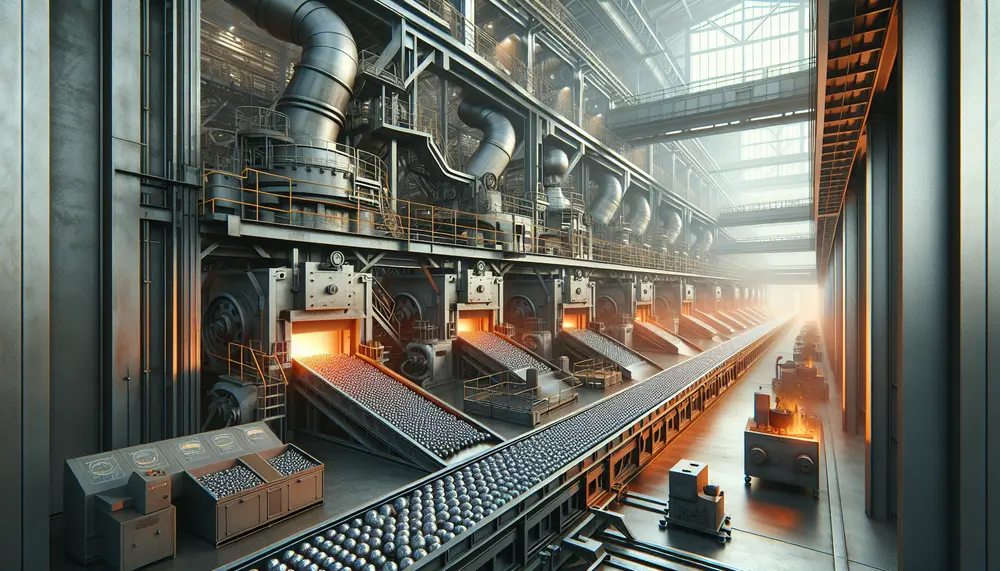
The manufacturing of steel balls is a complex process involving precise steps to produce high-quality products for various applications. It starts with selecting the right raw materials and includes forging, flashing, heat treating, grinding, lapping, and rigorous inspections to ensure...
 AI-generated
HTS codes are essential for classifying steel products in international trade, determining tariffs and compliance with regulations. They require precise understanding due to their complexity and frequent updates influenced by global trade changes....
 AI-generated
The steel products market is a vital, diverse industry integral to various sectors and driven by demand for durable materials. It's influenced by global economic trends, technological advancements, sustainability efforts, and competitive factors such as cost management and regulatory compliance....
 AI-generated
Steelmaking jobs encompass a wide range of roles beyond traditional production, including advanced areas like quality control and environmental compliance, requiring diverse professionals from metallurgists to engineers. The industry offers various career paths with competitive salaries and benefits, emphasizing innovation...
 AI-generated
The art of medieval steelmaking combined intuition, tradition, and a deep understanding of metallurgy to create strong yet flexible materials essential for tools, weapons, and status symbols. Despite limited scientific knowledge and resources, artisans mastered techniques like carbon infusion and...
 AI-generated
Nickel is essential in modern steelmaking, providing superior toughness, corrosion resistance, and non-magnetism that enable advanced applications across industries....
 AI-generated
Steel making in Australia is crucial for the nation's infrastructure and economy, involving a two-stage process from iron ore to steel production using electric arc and basic oxygen furnaces. The industry has evolved over a century with technological advancements and...
 AI-generated
Steel manufacturing transforms raw materials like iron ore into robust steel products through a complex process involving chemistry, physics, and engineering. This journey from ancient methods to modern techniques includes steps such as blast furnace operations and refining processes, highlighting...
 AI-generated
Animated GIFs simplify complex steelmaking processes by visually breaking down each step, making technical concepts accessible and memorable for all audiences....
 AI-generated
Steel making transforms iron ore into steel using blast furnaces or electric arc furnaces, involving processes like smelting and carbon adjustment to achieve desired properties. The production includes primary methods like Basic Oxygen Steelmaking and Electric Arc Furnace, followed by...
 AI-generated
Steel production in Malaysia, utilizing the Electric Arc Furnace method and benefiting from its ASEAN location, has grown significantly due to domestic demand and government initiatives like NIMP 2030. The industry faces challenges such as environmental impact but remains a...
 AI-generated
IspatGuru is a comprehensive resource for understanding steelmaking, offering insights into foundational concepts, advanced technologies like BOF and EAF processes, and sustainability. It bridges theory with practical applications while addressing modern challenges such as efficiency, environmental impact, and innovation in...
 AI-generated
Steel products trading involves buying and selling various steel types, influenced by factors like global demand and economic health; understanding product types, market participants, and logistics is key. Market research in this field is crucial for strategic decisions, competitive strategy,...
 AI-generated
The steel products industry is entering a new era where brands are focusing on innovation, quality, and sustainability to meet higher customer expectations. Branding has become essential in differentiating companies within the market through trust, credibility, and unique selling propositions...
 AI-generated
The steel making process is a complex series of steps transforming iron ore and coal into steel, involving stages like melting, refining, and casting. NPTEL provides comprehensive online education on this process through structured courses that offer both theoretical knowledge...