Table of Contents:
Primary Steelmaking Furnace Technologies: BOF, EAF, and Induction Compared
Choosing the right furnace technology is one of the most consequential decisions in steel production — it determines your raw material flexibility, energy cost structure, CO₂ footprint, and ultimately your product portfolio. The three dominant technologies — Basic Oxygen Furnace (BOF), Electric Arc Furnace (EAF), and Induction Furnace — each occupy distinct operational niches, and understanding their trade-offs at a technical level separates strategic procurement from guesswork.
BOF: Volume, Speed, and Integrated Mill Logic
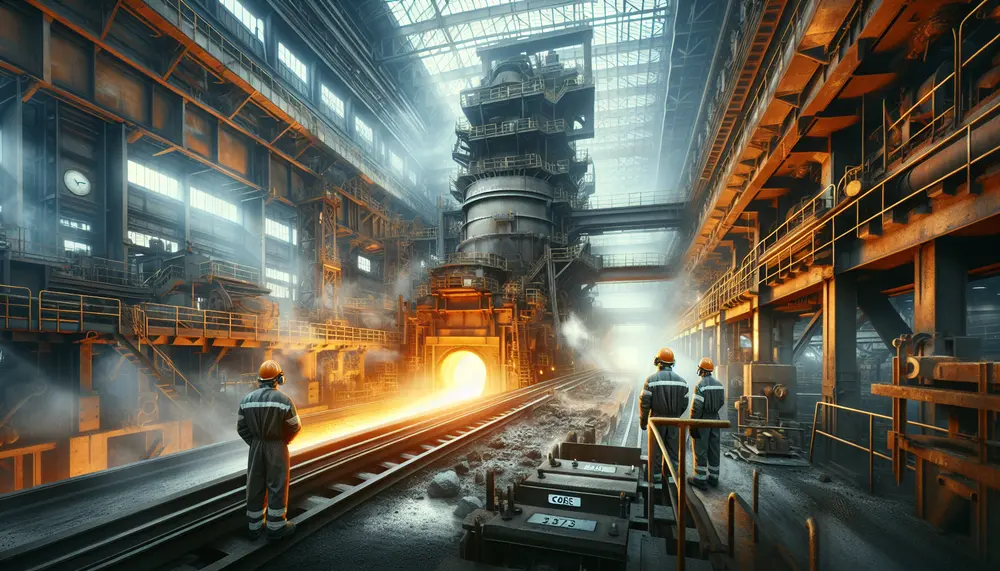
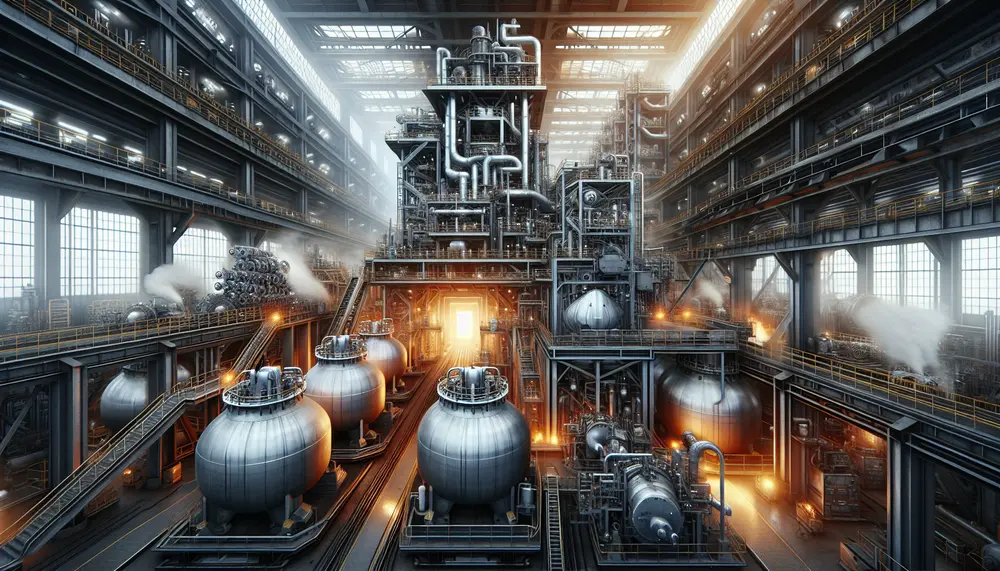
The BOF remains the backbone of high-volume flat product manufacturing, accounting for roughly 70% of global crude steel output as of 2023. Its fundamental advantage is throughput: a single converter vessel can process 250–350 tonnes of hot metal in a tap-to-tap cycle of just 30–40 minutes. That speed is only economically viable when fed continuously by a blast furnace, which makes BOF the default choice for integrated steelworks with captive iron sources. The process blows pure oxygen through a lance at supersonic velocity into molten pig iron, oxidizing carbon from roughly 4% down to target levels below 0.1% — a metallurgical transformation that generates enough exothermic heat to be essentially self-sustaining. The internal dynamics of oxygen injection and slag formation directly govern yield losses and downstream cleanliness, making converter control a critical competency. BOF steel typically achieves nitrogen levels below 30 ppm, a quality parameter that matters enormously for deep-drawing automotive sheet.
EAF: Scrap-Based Flexibility and the Decarbonization Pathway
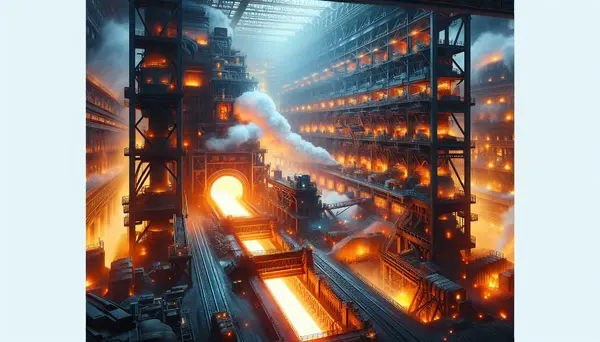
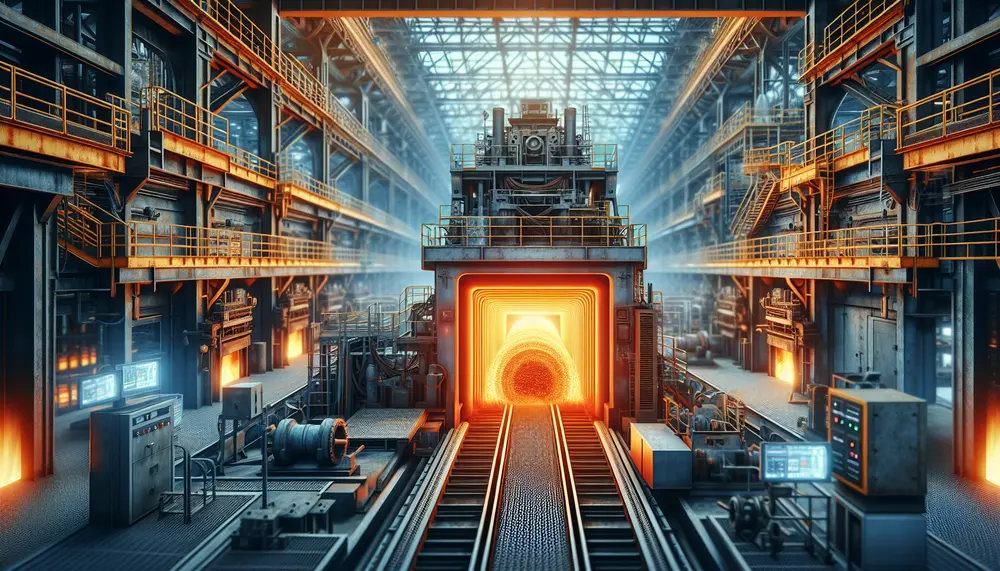
Electric arc furnace steelmaking has fundamentally reshaped the industry's cost and carbon calculus over the past three decades. EAFs consume 300–500 kWh per tonne of steel depending on scrap quality and charge mix, but they eliminate the need for coking coal and sinter plants — infrastructure that represents billions in capital and significant Scope 1 emissions. Modern AC EAFs operate with transformer capacities exceeding 150 MVA on 200-tonne vessels, achieving tap-to-tap times under 60 minutes. The critical variable is scrap quality: tramp elements like copper, tin, and nickel are non-removable via oxidation, which constrains EAF steel's penetration into the highest-specification long product and flat product markets. However, mills pairing EAFs with direct reduced iron (DRI) or hot briquetted iron (HBI) as a virgin iron supplement are increasingly producing automotive-grade and electrical steel grades. Voestalpine's DRI-EAF facility in Texas and SSAB's HYBRIT initiative demonstrate that the EAF route is converging toward BOF-level quality ceilings.
Induction furnaces occupy a fundamentally different tier. With capacities typically ranging from 1 to 30 tonnes, they excel in specialty alloy production, foundry applications, and markets where grid access is limited but scrap is abundant — particularly across South Asia, where India operates over 1,500 induction furnace units. The electromagnetic stirring inherent to induction heating provides excellent chemical homogeneity, but the absence of refining capability means operators are entirely dependent on input scrap chemistry for final product quality. Induction furnaces cannot dephosphorize or desulfurize effectively — any phosphorus entering with the charge stays in the steel.
- BOF strengths: Ultra-low nitrogen, high throughput, consistent chemistry from controlled hot metal input
- EAF strengths: Scrap flexibility, lower capital intensity, scalable to grid-renewable integration, faster capacity deployment
- Induction furnace strengths: Low capital cost, electromagnetic homogeneity, suitability for small batch specialty and alloy work
For steelmakers evaluating new capacity, the decision matrix increasingly centers on scrap availability, electricity tariff structure, and target product mix rather than pure metallurgical preference. A greenfield long product mill in a scrap-rich region with competitive power costs should default to EAF; an integrated flat product operation with captive ore assets retains compelling BOF economics despite its carbon exposure.
The Blast Furnace Route: Raw Materials, Coke Chemistry, and Heat Management
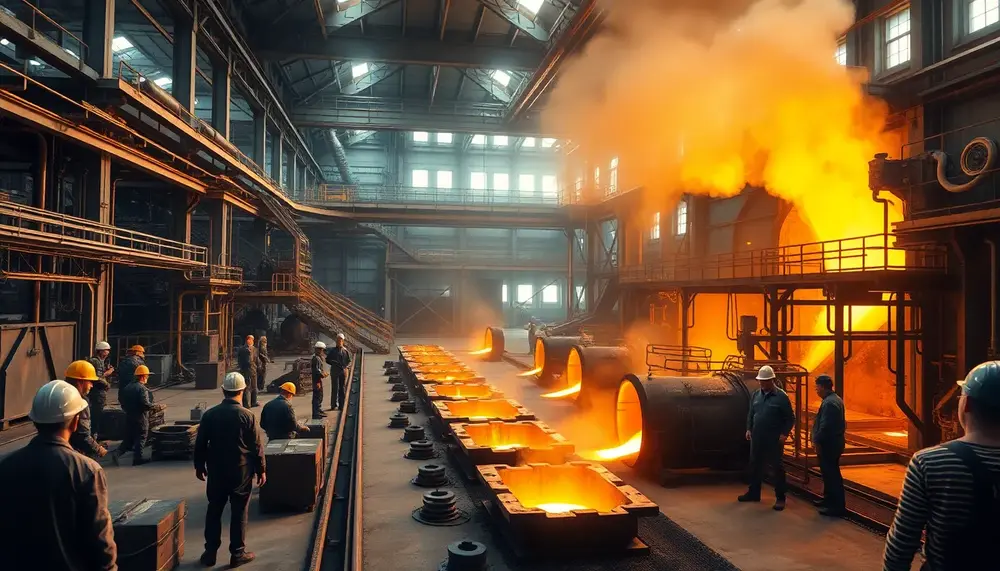
The blast furnace remains the dominant pathway for primary steel production globally, accounting for roughly 70% of total output. Understanding why requires looking past its industrial scale and examining the precise chemical and thermodynamic relationships that make it work. At its core, the process is a continuous counter-current reactor where solid burden descends against a rising column of hot gases reaching temperatures above 2,000°C at the tuyere level.
Raw Material Composition and Burden Preparation
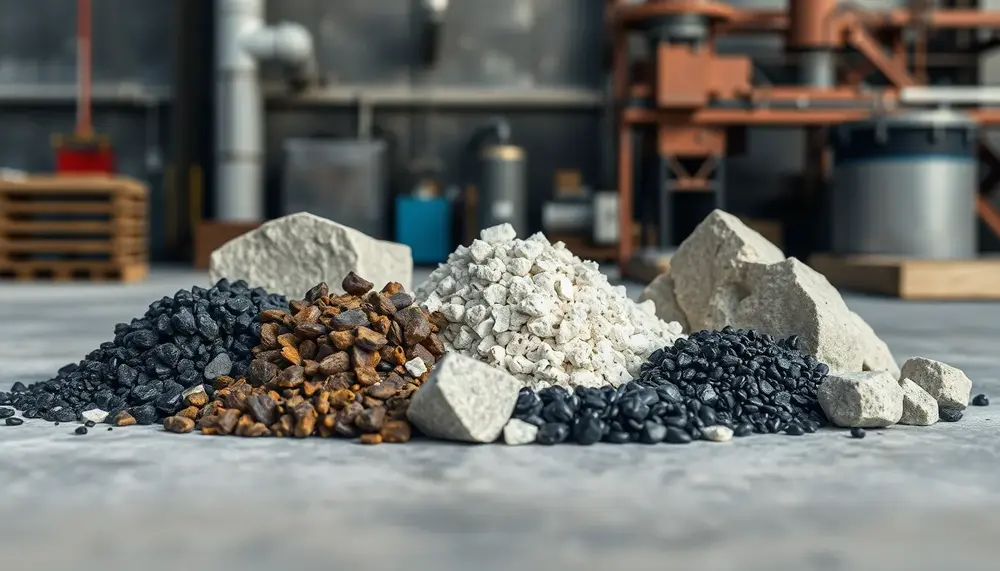
Iron ore quality directly determines furnace efficiency. Modern blast furnaces prefer a burden with iron content above 60%, which is why raw ore at 30–40% Fe must be processed into sinter or pellets before charging. Sinter plants typically process 70–80% of the iron-bearing burden, blending fine ores, return fines, and fluxes into a porous, reducible material. Pellets — fired at around 1,250°C — offer superior reducibility and are essential for high-productivity operations running above 2.5 tonnes of hot metal per cubic metre of furnace volume per day.
Limestone and dolomite serve as fluxing agents, neutralizing the acidic gangue (primarily SiO₂ and Al₂O₃) carried in with the ore. The resulting slag must maintain a basicity ratio (CaO/SiO₂) between 1.05 and 1.25 to ensure good fluidity and sulfur removal. Getting this balance wrong raises viscosity and can cause scaffolding — a dangerous buildup on furnace walls that disrupts burden descent and forces costly shutdowns.
The Indispensable Role of Metallurgical Coke
No other material replicates what coke does inside a blast furnace. It serves simultaneously as fuel, reductant, and the structural backbone holding the burden permeable to gas flow. Metallurgical coke must meet demanding specifications — typically a Coke Strength after Reaction (CSR) above 65 and a Coke Reactivity Index (CRI) below 25 — to survive mechanical degradation in the lower furnace where temperatures exceed 1,600°C. Poor coke quality is one of the fastest routes to increased coke rate (kg coke per tonne hot metal), which directly cuts into margins.
The combustion of coke at the tuyeres creates the raceway — a cavity of intense combustion where injected hot blast (oxygen-enriched air at 900–1,200°C) reacts with carbon. This generates CO and heat, driving the thermal and chemical work higher in the shaft. The resulting top gas, typically 20–25% CO and 20–22% CO₂, is captured and reused as fuel for stoves, sinter plants, and power generation — a critical element of energy efficiency.
Pulverized coal injection (PCI) has become the standard method for reducing coke consumption. Modern furnaces inject 150–200 kg of coal per tonne of hot metal, substituting expensive metallurgical coke at a replacement ratio of roughly 0.85–0.92 kg coke per kg coal. Beyond coal, some operators inject natural gas or oil, though economics shift these choices with commodity prices.
Lime additions at subsequent steelmaking stages are directly influenced by the sulfur content of the hot metal leaving the furnace — typically 0.020–0.040% S — making desulfurization station performance tightly linked to blast furnace operating discipline. Controlling slag chemistry, coke quality, and injection rates as an integrated system, rather than optimizing each in isolation, is what separates top-quartile operations from average performers.
Secondary Metallurgy and Refining: AOD, Degassing, and Composition Control
Once molten steel leaves the primary melting vessel — whether an electric arc furnace or a basic oxygen furnace — it is far from finished. Secondary metallurgy transforms a rough liquid alloy into a precisely engineered material. This stage determines final chemistry, cleanliness, and mechanical properties. For high-specification grades, 60–80% of the total metallurgical work happens outside the primary furnace.
AOD Converters: The Backbone of Stainless Steel Refining
The Argon Oxygen Decarburization (AOD) process remains the dominant refining route for stainless steels and high-alloy grades. Introduced industrially in 1968, AOD now accounts for roughly 75% of global stainless steel production. The core principle is thermodynamic: by diluting oxygen with argon or nitrogen, the process lowers the partial pressure of CO, enabling deep carbon removal without the excessive chromium oxidation that would occur in a pure oxygen atmosphere. This allows carbon contents below 0.03% while retaining 98–99% of the charged chromium. For anyone looking to understand the mechanics behind this, a detailed breakdown of how decarburization works at the tuyere level illustrates why gas ratios shift from O₂-rich in the early stage to pure argon during the final reduction phase.
Process control during AOD involves three distinct stages: decarburization, reduction, and desulfurization. During reduction, ferrosilicon or aluminum is added to recover oxidized chromium from the slag — recoveries above 95% are standard in well-operated shops. Lime and fluorspar additions control slag basicity, targeting a CaO/SiO₂ ratio between 1.6 and 1.8 for effective sulfur partition. The metallurgical levers available at each AOD stage give melt shop operators tight control over final sulfur levels, often achieving below 0.005% S in finished heats.
Lance design and condition directly affect gas injection efficiency and refractory wear rates. Submerged tuyeres and top lances each serve specific functions; the role of lances in delivering gases and managing heat balance is underappreciated but critical, particularly when transitioning between gas phases or when skull buildup compromises flow patterns.
Vacuum Degassing: Hydrogen, Nitrogen, and Inclusion Control
For carbon and low-alloy steels demanding ultra-low gas content — bearing steels, tire cord, heavy plate for pressure vessels — vacuum degassing is mandatory rather than optional. RH (Ruhrstahl-Heraeus) degassers, operating at chamber pressures of 0.5–2.0 mbar, circulate steel through a snorkel system at flow rates of 80–150 tonnes per minute, stripping dissolved hydrogen to below 1.5 ppm within 15–20 minutes. VD (Vacuum Degassing) and VOD (Vacuum Oxygen Decarburization) units handle stationary ladles and are preferred where combined decarburization and desulfurization are required simultaneously. The practical parameters that govern vacuum treatment efficiency — snorkel submersion depth, argon stirring intensity, and initial hydrogen content — determine whether a heat meets specification or requires retreatment.
Inclusion morphology control often runs parallel to degassing. Calcium treatment via CaSi wire injection transforms hard alumina clusters into liquid calcium aluminates, significantly improving castability and fatigue life in the final product. Typical calcium additions range from 150–300 g/tonne, with Ca/Al ratios targeted above 0.09 to ensure full inclusion modification. Timing matters: calcium treatment after degassing prevents re-oxidation and maximizes modification efficiency.
- RH degassing: preferred for high-volume carbon steel production, short cycle times (15–20 min)
- VD/VOD: suited for smaller heats, simultaneous decarburization and desulfurization
- Ladle furnace (LF): temperature homogenization, fine alloy trim, sulfide shape control
- Wire injection: calcium, carbon, and FeTi additions with precision ±0.002% compositional control
Secondary metallurgy is where process discipline pays dividends. Consistent argon flow rates, calibrated wire feeders, accurate temperature measurement with immersion thermocouples, and disciplined slag management separate heat-to-heat consistency from chronic rejects. Shops producing aerospace or automotive-grade material typically maintain composition standard deviations below ±0.005% for critical elements — achievable only through rigorous secondary metallurgy protocols.
Chemical Reactions Driving Steel Quality: Oxidation, Reduction, and Alloying
Every ton of steel produced is ultimately the result of precisely controlled chemical reactions happening at temperatures exceeding 1,600°C. The metallurgist's job is not merely to melt iron and add carbon — it's to orchestrate a complex sequence of oxidation, reduction, and alloying reactions that determine whether the final product meets tight mechanical specifications or ends up as scrap. Understanding the chemistry at a granular level separates plants that consistently hit grade tolerances from those that struggle with heat-to-heat variability.
Oxidation and Decarburization: Controlled Burning as a Refining Tool
Decarburization is the foundational reaction in basic oxygen steelmaking. When oxygen is lanced into the molten bath at supersonic velocities — typically 850–950 Nm³/minute in a 300-ton converter — it reacts preferentially with dissolved carbon to form CO and CO₂. This exothermic reaction releases roughly 10.5 MJ per kilogram of carbon oxidized, which partially offsets energy requirements. The reaction C + O → CO drives carbon content from approximately 4.5% in hot metal down to target levels often below 0.05% for ultra-low carbon grades. The sequence of competing oxidation reactions — carbon vs. iron vs. manganese — is temperature-dependent and must be timed carefully; premature iron oxidation inflates FeO in the slag and increases yield losses.
Slag chemistry is inseparable from oxidation control. A well-formed basic slag with a basicity ratio (CaO/SiO₂) between 3.0 and 3.5 effectively absorbs phosphorus, which transfers from the metal as P₂O₅ under oxidizing conditions. Phosphorus removal exceeding 90% is routinely achieved, but only when bath temperature stays below 1,680°C during the blow — higher temperatures reverse the reaction and return phosphorus to the melt. This is a constraint that shapes the entire blowing practice.
Reduction and Deoxidation: Cleaning the Steel Before Casting
After oxygen blowing, dissolved oxygen content in the melt typically reaches 600–900 ppm — far too high for casting without causing porosity or inclusion formation. Deoxidation reverses this by adding elements with higher oxygen affinity than iron. The standard practice follows a hierarchy: aluminum (added at 0.5–2.0 kg/ton) reduces oxygen below 5 ppm for killed steels, while silicon and manganese additions provide intermediate deoxidation for semi-killed grades. The resulting alumina inclusions (Al₂O₃) must then be floated out during ladle treatment — typically 15–20 minutes of argon stirring achieves inclusion counts below 10 per mm² in quality-critical grades.
Ladle furnace refining extends the chemistry window significantly. Reduction reactions in secondary metallurgy allow precise sulfur removal through calcium treatment, which converts solid Al₂O₃ inclusions into liquid calcium aluminosilicates — a critical step for improving castability and reducing nozzle clogging. Calcium wire injection at 200–400 m/heat is standard practice for API pipeline grades requiring sulfur below 0.002%.
Alloying additions in the ladle demand sequencing discipline. Chromium and molybdenum are typically added early due to their sluggish dissolution kinetics at 1,580°C, while boron — effective at concentrations as low as 10–30 ppm for hardenability enhancement — must be added after aluminum deoxidation to prevent B₂O₃ formation. Nickel and copper dissolve rapidly and can be added closer to the end of ladle treatment. Different steelmaking routes impose different constraints on alloy recovery rates, which is why EAF operations with cold DRI charge often achieve more consistent alloy yields than BOF routes processing variable hot metal.
Scrap-Based and Circular Production: EAF Mini-Mills and Recycling Economics
The economics of scrap-based steelmaking have fundamentally reshaped global production hierarchies over the past three decades. Electric Arc Furnace (EAF) mini-mills now account for roughly 30% of global steel output and over 70% of U.S. production — a dominance built not on tradition but on structural cost advantages that integrated blast furnace operations simply cannot replicate. The capital expenditure to build a greenfield EAF mini-mill runs approximately $300–$500 per ton of annual capacity, compared to $1,000–$1,200 per ton for a comparable integrated facility. That gap alone dictates where investment flows.
Understanding how scrap metal is converted into finished steel products reveals why this model is so resilient. Rather than mining iron ore, sintering, coking, and reducing through a multi-step thermal cascade, EAF operators purchase ferrous scrap — industrial offcuts, end-of-life vehicles, demolished structures — and melt it directly. The feedstock cost typically represents 60–70% of total operating expenses, which makes scrap market intelligence a core competency for any EAF operator. When the spread between scrap prices and finished steel widens, margins expand rapidly. When it compresses, variable cost flexibility allows mini-mills to throttle output in ways that integrated producers cannot afford to do.
The EAF Process and Its Operational Leverage
The technological evolution of electric arc furnaces has pushed tap-to-tap cycle times below 60 minutes in optimized operations, with some facilities averaging 45–50 minutes per heat. Modern furnaces operate at 500–900 kWh per ton of steel, down from over 600 kWh in the 1990s, driven by improvements in electrode design, foamy slag practice, and oxy-fuel burner integration. Electrode consumption — historically a major cost driver — has dropped to 1.2–1.8 kg per ton in best-practice facilities. These efficiency gains compound: faster cycles increase yield per installed capacity without additional capital.
A detailed look at the metallurgical mechanics of EAF steelmaking clarifies why scrap quality management is non-negotiable. Residual elements — copper, tin, nickel, chromium — accumulate in the scrap pool with each recycling cycle and cannot be removed by conventional steelmaking chemistry. This "tramp element" problem limits EAF-produced steel in automotive exposed panels and other demanding applications. Mini-mills have responded by tightening scrap specifications, building direct reduced iron (DRI) and hot briquetted iron (HBI) consumption capability to dilute residuals, and investing in continuous casting sequences that minimize material transitions.
Nucor's Model as the Industry Benchmark
No examination of EAF economics is complete without studying how Nucor built its vertically integrated mini-mill network into the most profitable steel producer in North America. Nucor's decentralized plant model — small facilities close to scrap sources and end markets — reduces logistics costs and gives plant managers direct profit-and-loss accountability. Their scrap procurement subsidiary, The David J. Joseph Company, provides supply chain visibility that independent mini-mills lack entirely.
For practitioners evaluating circular production strategies, the key operational levers are:
- Scrap grading discipline: Segregating No. 1 busheling from shredded or obsolete scrap directly controls residual chemistry and downstream yield
- DRI/HBI blending ratios: Targeting 10–20% DRI addition can reduce copper content by 15–25%, unlocking higher-grade product applications
- Energy procurement strategy: Power purchase agreements with off-peak pricing structures can reduce electricity costs by $8–$15 per ton in deregulated markets
- Yield optimization: Reducing tap-to-tap losses from 8% to 6% on a 500,000-ton facility translates to roughly 10,000 additional tons of sellable steel annually
The circular model's emissions profile — approximately 0.4–0.6 tons of CO₂ per ton of EAF steel versus 1.8–2.1 tons for blast furnace routes — positions scrap-based producers favorably under emerging carbon border adjustment mechanisms. This regulatory tailwind, combined with structural cost advantages, ensures EAF mini-mills will continue capturing market share from integrated producers across flat and long product segments through the 2030s.
FAQ zu Production Processes: Essential Guide 2026
What are the key components of manufacturing efficiency?
Manufacturing efficiency hinges on process design, workflow sequencing, and capacity allocation. These components influence the cost per unit, lead times, and competitive positioning in the market.
How do Lean manufacturing and Six Sigma contribute to production success?
Lean manufacturing focuses on minimizing waste while maximizing productivity, while Six Sigma employs data-driven techniques to reduce defects. Together, they help companies achieve significant cost reductions and improve operational performance.
What role does automation play in modern production processes?
Automation enhances consistency, efficiency, and speed in production processes. It reduces human error and labor costs, allowing manufacturers to scale operations and respond quickly to market demands.
How can companies effectively monitor and adjust production processes?
Implementing real-time monitoring systems and data analytics enables companies to assess production performance continuously. Adjustments can be made promptly based on performance metrics, leading to improved efficiency and reduced waste.
What are the emerging trends in production processes for 2026?
Emerging trends include increased use of artificial intelligence, integration of IoT for better connectivity, sustainable practices to reduce environmental impact, and a growing emphasis on circular economy principles in manufacturing.